Almost four years have passed since the Supreme Court rescinded the constitutional right to abortion in Dobbs v. Jackson Women’s Health Organization. Today, 13 states enforce total abortion bans, and another eight states ban abortion at or before 18 weeks’ gestation.
Project 2025, the 900-page instruction manual created by The Heritage Foundation in 2023 to guide the next Republican president, boasts that “the Dobbs decision is just the beginning.” Anti-abortion activists believed the Court’s ruling heralded the elimination of abortion nationwide, and claimed that doing so would protect women and children.
They were wrong on every count. A growing body of research shows that the Supreme Court did not end abortion. It only made pregnancy more dangerous, for both women and their children.

The Guttmacher Institute published a report on Tuesday showing that clinicians in the United States provided an estimated 1,126,000 abortions in 2025. Because clinicians in 2024 provided an estimated 1,124,000 abortions, Guttmacher concluded that the incidence of abortion “remained stable nationally,” despite “continued shifts” in where and how abortions occurred; notably, patients in states that restrict abortion are increasingly using telehealth so they can still access care.
Other post-Dobbs trends, however, are more troubling. Researchers at Johns Hopkins published a study last year concluding that infant mortality rates in the year following Dobbs increased by 5.6 percent above expected levels in states that adopted abortion bans, resulting in 478 excess infant deaths. For Black infants, the death rate showed a relative increase of 10.98 percent—nearly twice as high. Another study, published this month in the American Journal of Public Health, shows that the rate of pre-term births for Black women in states with abortion bans increased by 2.1 percent in the first 18 months following Dobbs.
Still another study, published this month in Economic Inquiry, shows how abortion bans are negatively impacting low-income families. While the monthly birth rate in states with abortion bans has increased by 1.57 percent, the participation rates in the federal food assistance program for women, infants, and children increased by 4.3 percent for postpartum non-breastfeeding women, and 2.1 percent for formula-fed infants.
The increase in food assistance needs in states with abortion bans translated to an additional $6.9 million in food costs in 2023 alone—a heightened demand that the study notes may exceed states’ budgets, since Congress doesn’t provide enough funds to let every eligible individual participate in the program. If states do not meet this financial strain, families’ nutritional needs will go unmet, too.
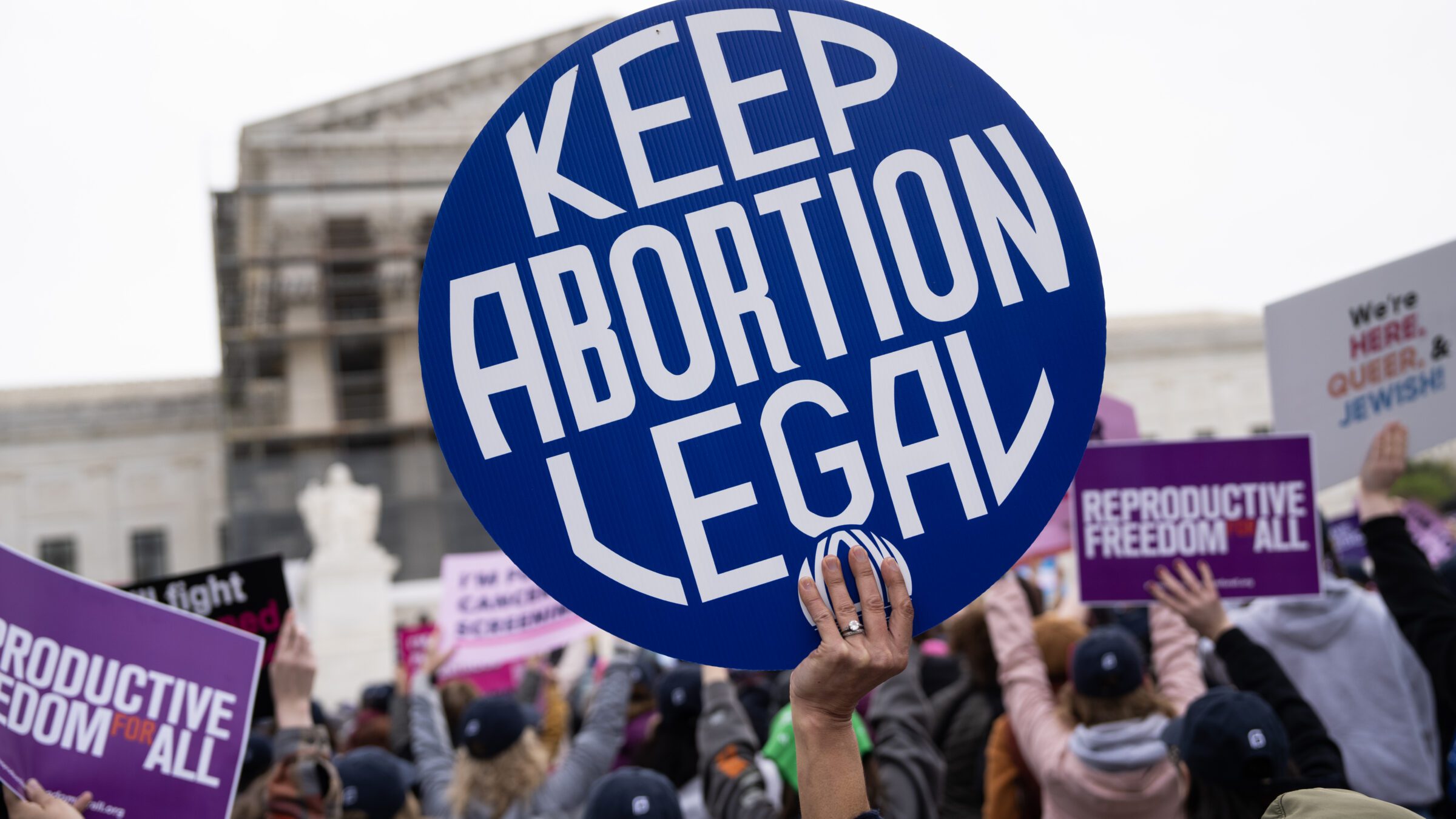
(Tom Williams/CQ-Roll Call, Inc via Getty Images)
Some supporters of abortion bans tout that maternal mortality rates decreased after Dobbs: Earlier this month, the Centers for Disease Control reported that 649 women died during pregnancy or shortly after the pregnancy ended in 2024, down slightly from 669 deaths in 2023. The agency’s provisional data for 2025 also suggests national maternal mortality rates are continuing to trend downwards, after surging in 2021 and 2022 at the height of the COVID-19 pandemic.
But these top-line numbers, which are still higher than those in comparably wealthy countries, do not prove what anti-abortion activists suggest they do. Basically, maternal deaths spiked when COVID-19 deaths spiked. According to CDC data, the nationwide maternal mortality rate in 2018 was 17.4 deaths per 100,000 live births. In 2021, it jumped to 32.9. And in 2024, it dipped to 17.9. While the decline of the nationwide death rate is a welcome development, the evidence suggests that the country is simply returning to pre-pandemic levels—not experiencing any benefit from Dobbs.
On the contrary, numerous recent studies of maternal mortality in the post-Dobbs era suggest that abortion bans are actively worsening maternal health outcomes, and widening the racial death rate disparity. The CDC’s data shows that the maternal mortality rate for white women in 2024 was 14.2 deaths per 100,000 live births, yet for Black women, the rate was 44.8 deaths. Put differently, Black mothers are dying at a rate more than three times as high as white mothers, regardless of income or education level.
In April 2025, the Gender Equity Policy Institute reported that a mother’s risk of dying is “nearly twice as high” in states that ban abortion, and Black women in states with bans are still more than three times as likely to die as white women in those states. This means that for Black women who live in states that ban abortion, the maternal mortality rate rises to 60.9 deaths per 100,000 live births. Research published in the October 2025 issue of Pregnancy, the official journal of the Society for Maternal-Fetal Medicine, similarly concluded that maternal mortality rates are “consistently higher” in states that prohibit abortion.
Maternal mortality data has also become disturbingly difficult to access. Following Dobbs, officials in at least four states began limiting or even dismantling their maternal mortality review committees. Doing so prevents the state entities tasked with evaluating maternal health outcomes from fully documenting and analyzing deaths related to abortion restrictions. In effect, some states with abortion bans are both burying women and also burying the truth.
Last year, on the anniversary of Dobbs, the head of a group of doctors opposed to abortion claimed that the Court’s decision was having an “overwhelmingly positive effect” on women and children. The data that has emerged in the wake of Dobbs proves otherwise. Revoking the constitutional right to abortion did not lower the rates of abortion. It heightened the risks of pregnancy, and has subjected families to untold, unnecessary harm.